Is Camden a Village? Unpacking History and Marketing

← Back to Stories

Is Camden a Village? Unpacking History and Marketing

Camden History Notes - Ian Willis | 2026-02-18

The 'Camden Village' marketing strategy leverages nostalgia and historical authenticity to promote its charm as a getaway near Sydney. It celebrates Camden's heritage, exploring themes of community and continuity, while questioning the true nature of its village identity. This strategy taps into sentimental longings for simpler times, appealing emotionally to potential visitors.

Is Camden a village? Has it ever been a village?

This post will attempt to unpack this marketing campaign. The discussion will examine whether the marketing slogans are authentic by posing several questions.

The ultimate authority on the foundation of Camden is historian Alan Atkinson. He titled his book Camden: Farm and Village Life in Early New South Wales, and Chapter 4 is titled ‘Village Life’. Atkinson writes

The Macarthurs hoped to see their village become a ‘large town’… (Atkinson, 43)

There are numerous references to the village of Camden throughout the book.

What is a village?

According to National Geographic, a village is a small settlement, usually in a rural area, with 500 to 2500 people. The village is often formed around a central point, e.g., a church, a marketplace or a public space. (Evers 2024)

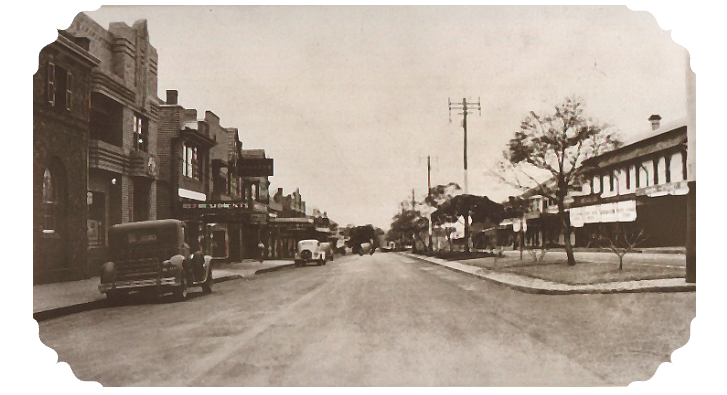
These features characterised the private Camden village founded by the Macarthur brothers, James and William, in 1840. The village was at the northern entrance to their pastoral property, Camden Park, at the crossing of the Nepean River, as outlined by Alan Atkinson.

Village communities tend to be closed, inward-looking, characterised by traditional values and customs, including parochialism, paternalism, patriarchy, tight family and interpersonal networks, gender expectations, social ranking, and sectarianism, which generate trust and interdependence within the community.

These features are typical of Camden until the 1950s, when the population began to grow as jobs were created by the Burragorang coalfields. (Willis, 2006, 2009)

Even by 2006, there was enough of the Old Camden around for Sydney architect Hector Abrahams to say that the local area’s cultural heritage makes the historic town of Camden the best-preserved country town on the Cumberland Plain (Camden Advertiser, 28 June 2006).

Over the last 25 years, Sydney’s rural-urban fringe has crept up to the fringes of the Camden township. Despite these incursions, the township has retained many identifiable features of its past (Willis 2012) and, in the process, added another layer of history to the Camden story.


Read the full article in the website link - Camden History Notes 

More about - Listing on the State Heritage Register, Urban Village, Country Charm, Reflection - simpler times are an illusion.

We thank Ian Willis for allowing us to reproduce this article.


The 'Camden Village' marketing strategy leverages nostalgia and historical authenticity to promote its charm as a getaway near Sydney. It celebrates Camden's heritage, exploring themes of community and continuity, while questioning the true nature of its village identity. This strategy taps into sentimental longings for simpler times, appealing emotionally to potential visitors.

Is Camden a village? Has it ever been a village?

This post will attempt to unpack this marketing campaign. The discussion will examine whether the marketing slogans are authentic by posing several questions.

The ultimate authority on the foundation of Camden is historian Alan Atkinson. He titled his book Camden: Farm and Village Life in Early New South Wales, and Chapter 4 is titled ‘Village Life’. Atkinson writes

The Macarthurs hoped to see their village become a ‘large town’… (Atkinson, 43)

There are numerous references to the village of Camden throughout the book.

What is a village?

According to National Geographic, a village is a small settlement, usually in a rural area, with 500 to 2500 people. The village is often formed around a central point, e.g., a church, a marketplace or a public space. (Evers 2024)

These features characterised the private Camden village founded by the Macarthur brothers, James and William, in 1840. The village was at the northern entrance to their pastoral property, Camden Park, at the crossing of the Nepean River, as outlined by Alan Atkinson.

Village communities tend to be closed, inward-looking, characterised by traditional values and customs, including parochialism, paternalism, patriarchy, tight family and interpersonal networks, gender expectations, social ranking, and sectarianism, which generate trust and interdependence within the community.

These features are typical of Camden until the 1950s, when the population began to grow as jobs were created by the Burragorang coalfields. (Willis, 2006, 2009)

Even by 2006, there was enough of the Old Camden around for Sydney architect Hector Abrahams to say that the local area’s cultural heritage makes the historic town of Camden the best-preserved country town on the Cumberland Plain (Camden Advertiser, 28 June 2006).

Over the last 25 years, Sydney’s rural-urban fringe has crept up to the fringes of the Camden township. Despite these incursions, the township has retained many identifiable features of its past (Willis 2012) and, in the process, added another layer of history to the Camden story.


Read the full article in the website link - Camden History Notes 

More about - Listing on the State Heritage Register, Urban Village, Country Charm, Reflection - simpler times are an illusion.

We thank Ian Willis for allowing us to reproduce this article.


For more information

Gallery